
Do scammers actually get prosecuted?
We Read 38,779 DOJ Files. The Scams Aren't Prosecuted.
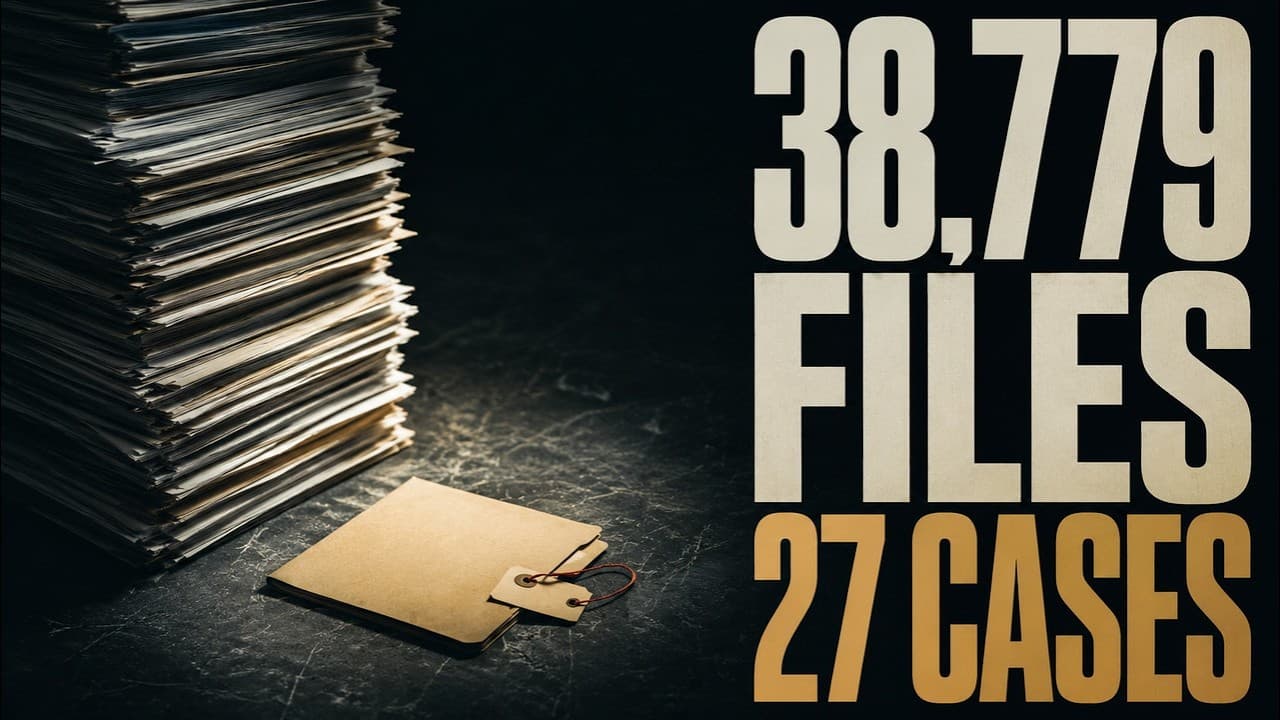
We read every Justice Department press release for two years — 38,779 of them — to find out which scams against older people actually get charged.
12 min 49 secPublished 19 August 2026DOJ press-release corpus, Aug 2024 - Aug 2026 · anchor case: U.S. v. Gravel-Nadon et al. (W.D. Ky.)
12 min 49 sec · Full episode
Do scammers actually get prosecuted?
We read every Justice Department press release for two years — 38,779 of them — to find out which scams against older people actually get charged.
A courier flew from Panama to knock on a door in Kentucky. The voice that set it up was in a Canadian call centre. Six people went to federal prison, and not one of them made the phone call. That case is the shape of the whole dataset: federal enforcement lands on the people who move the money, years later, while the person who dialled is usually abroad. This episode also states plainly where the first version of our own analysis was wrong, and how wrong these numbers might still be.
By the numbers
38,779
DOJ releases read
633
elder-fraud cases after cleaning
6 years
median sentence imposed
What happens in this episode
A courier flew from Panama to knock on a door in Kentucky. The voice that set it up was in a Canadian call centre. Six people went to federal prison, and not one of them made the phone call. That case is the shape of the whole dataset: federal enforcement lands on the people who move the money, years later, while the person who dialled is usually abroad. This episode also states plainly where the first version of our own analysis was wrong, and how wrong these numbers might still be.
Running order
Each chapter opens the episode on YouTube at that point.

Three tells that would have stopped it
Screenshot this. Put it on the fridge. It is the whole episode in three lines.
Tell I — The script arrives by telephone
An emergency that arrives by telephone is a script, not an emergency.
In the Kentucky case the story was always the same: a grandchild, a car accident, money needed now. Hundreds of victims, one sentence. Real emergencies do not arrive pre-written. Hang up and call the person back on a number you already have.
Tell II — The courier at the door
Nobody legitimate sends a person to your door for cash.
Not a court. Not a lawyer. Not a bank. In this dataset the courier is the single most common feature of the money trail — more common than cryptocurrency. If someone is coming to collect, you are not paying a fee. You are handing cash to a mule.
Tell III — You are the enforcement
The arrest is not coming in time.
The people who called are usually abroad. The prosecutions land years later, on the people who moved the money. Which means the only person who can stop this at the moment it happens is the one holding the phone. As the U.S. Attorney in Kentucky put it: have the courage to hang up when the caller pushes you harder for money.
The documents behind this episode
Every on-screen claim in this episode maps to one of the documents below. They are court records, sentencing releases, regulator filings and official reports, published by the bodies that issued them. Where a case is named, it has been adjudicated.
U.S. Department of Justice
U.S. Department of Justice
13 Jun 2025
4 sources · Case: DOJ press-release corpus, Aug 2024 - Aug 2026 · anchor case: U.S. v. Gravel-Nadon et al. (W.D. Ky.)
Disclosure
Narration uses a synthetic AI voice; some illustrations on the evidence board are AI-generated and are visibly illustrations. Disclosed per EU AI Act Article 50. Every factual claim is sourced from public court records and official releases.