
About Scam Autopsy
Every episode, one scam taken apart on the table — how it hooks you, where your money physically goes, and the three tells that would have saved the victim.
One scam per episode. Built only from cases that have already been through a court, and from records published by federal agencies. No actors. No music that tells you how to feel. A table, a light, and the documents.
Made for the people the scams are aimed at
The primary audience is people between fifty and seventy-five — the age band these operations deliberately target, often watching on a television or a phone held at arm’s length. Everything here is built for that: large type, high contrast, plain words, no internet slang, and a text-size control in the header of every page.
The second audience is their adult children, who are usually the ones who find the video first and send it on. That is why every episode ends with three tells short enough to repeat down the phone.
Watch it with your parents — not at them.
And if it has already happened, the series takes one position and holds it: you were not foolish. You were up against a production line — funded, staffed and rehearsed before it reached you.

Five acts, one scam
Every episode follows the same five movements, in the same order, so that by the second one you already know where you are.
- Act one
The Hook
The first contact, exactly as the person received it. The text to the wrong number. The call that says a grandchild is in jail. Nothing dramatised.
- Act two
The Machine
Who is actually on the other end. Not one criminal — a payroll, with openers, dispatchers, runners and money desks, described from the filings.
- Act three
The Money
Where the money physically goes, hop by hop, from the bank counter or the card rack to the account that finally empties.
- Act four
The Autopsy
Why it worked on this particular person. Never why they were foolish. The methods are engineered, and they are engineered to work on careful people.
- Act five
The Three Tells
Three things that would have stopped it, said plainly enough to repeat to somebody else at dinner the same evening.
- Runtime
Runtime follows the material. An episode is never padded to hit a number, and never cut short of the record. The published runtimes are below.
Four things you will not see
No reenacted hysteria
No actors, no screaming, no dramatised break-ins. The evidence board and the documents carry the episode.
No true-crime tone
No lurid scoring, no cliffhangers, no cruelty played for entertainment. The subject is somebody's parent.
No unadjudicated names
Nobody is named as a wrongdoer outside a documented adjudication. Suspicion is not evidence and it never goes on screen.
No blame
The victim is never the punchline. Being targeted by a professional operation is not a character flaw.
How each claim is sourced, and what in the production is made with AI, is set out in full on our method. The short version: narration is a disclosed synthetic AI voice, some board illustrations are AI-generated and look like illustrations, and every fact comes from a document you can open yourself.

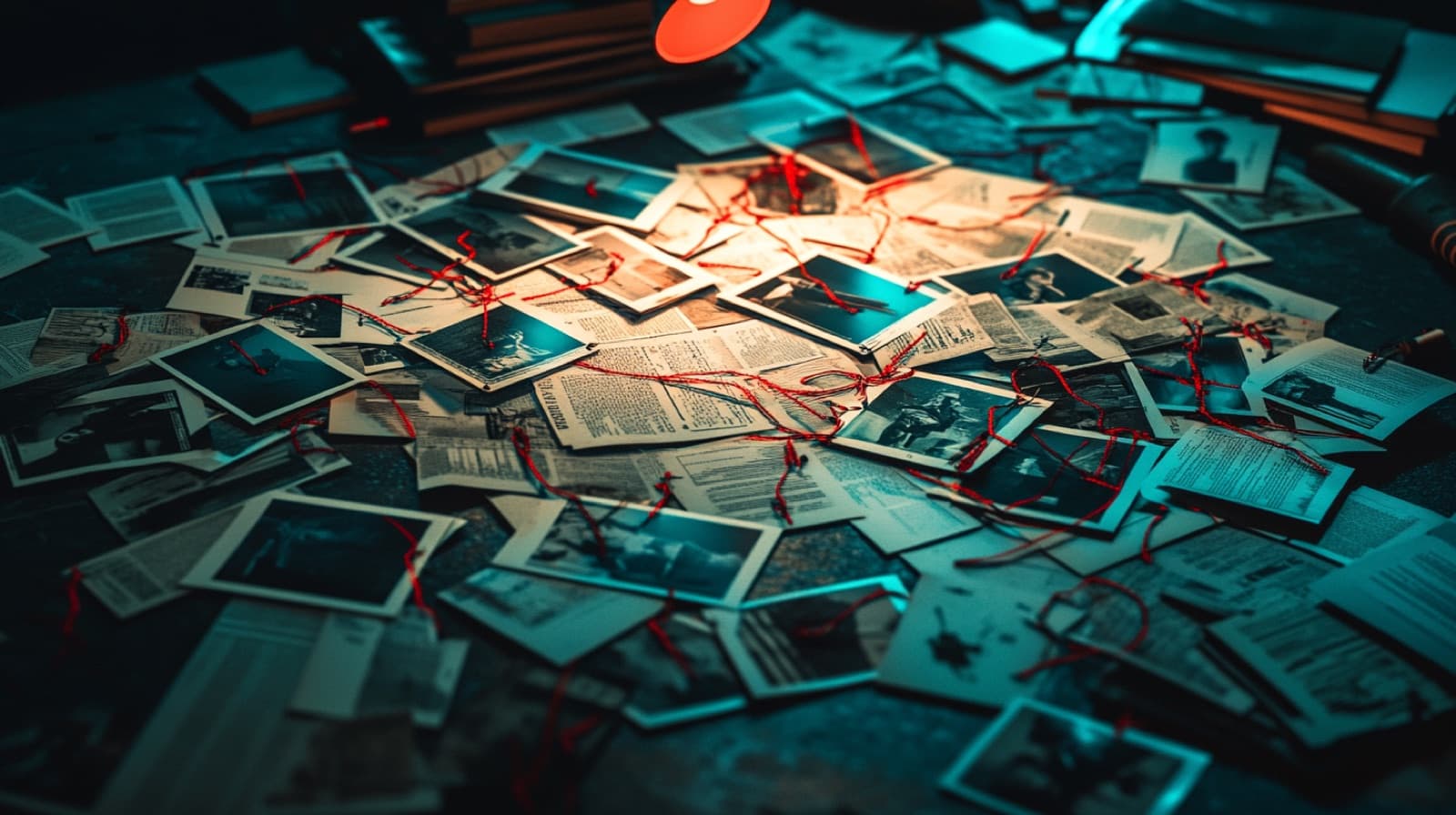
One evidence board on dark slate, lit by a single cold surgical light. Manila tags, court paper, a length of red string between the things that are connected. It is a post-mortem, carried out calmly, on a machine that was built to take money from people. The restraint is the point: this material is serious enough that it does not need help.
Who to write to
Four addresses, so a message reaches the right place first time. Every one of them is read by a person.
- Presspress@scamautopsy.org
Interviews, citation requests, and questions from journalists.
- Organisationsorgs@scamautopsy.org
Senior centres, libraries, credit unions, consumer-protection offices and community groups who want to use the material with the people they serve.
- Licensinglicensing@scamautopsy.org
Broadcast, classroom and internal-training use of the episodes.
- Generalhello@scamautopsy.org
Everything else — including corrections to anything we have published.
Scam Autopsy is educational content, not legal or financial advice. We cannot recover money, act on your behalf, or investigate an individual case. If a scam is happening right now, the help page lists the hotlines and reporting lines that can.
One scam per week, taken apart on the table.
3 episodes published so far. New ones arrive on the YouTube channel first.